Rectangle Round Split: A Designer's Real-World Review
As a designer who has spent years translating digital concepts into tangible stitched goods, I approach every new asset with a mix of excitement and skepticism. The market is flooded with generic shapes, so finding a machine embroidery design that actually solves a layout problem is rare. That is exactly why I sat down to evaluate the Rectangle Round Split. This piece falls squarely into the Decorative Elements category, but its utility extends far beyond simple decoration. It is a structural graphic designed to frame, divide, or accentuate other elements in a project.
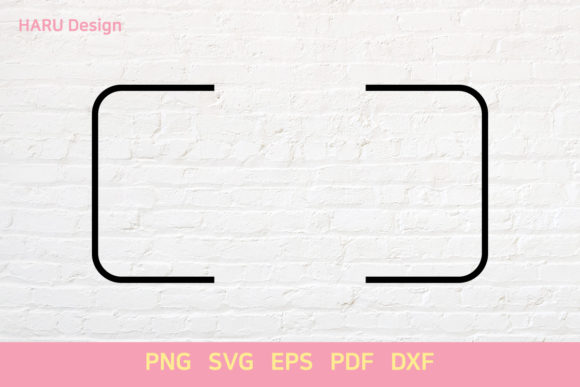
The first thing you notice when opening the file suite—which includes an SVG, EPS, PNG, PDF, and DXF—is the versatility. The artboard size is set for a 12in×12in workspace, which gives you plenty of room to scale without losing integrity. However, as someone who has learned the hard way that "scalable" does not always mean "stitchable," I immediately started thinking about how this specific geometry translates to thread. The name suggests a hybrid form: the stability of a rectangle softened by rounded corners, split perhaps to create negative space or a window for text. In the world of Graphics, this duality is powerful.
Visual Impact and Mood
Visually, the Rectangle Round Split exudes a modern, clean aesthetic. It avoids the harshness of sharp 90-degree angles while maintaining enough structure to feel professional. When I visualize this on a finished product, it feels like a sophisticated border or a container for monograms. The mood is neutral yet intentional, making it perfect for branding where you want to look established without being overly ornate. For an Etsy seller or a small shop owner, this kind of subtle professionalism can significantly boost perceived value. Customers often equate clean lines with high-quality craftsmanship.
When considering the stitch types, my mind goes straight to satin stitches for the outlines and fill stitches for any solid areas. The rounded corners are crucial here; they allow the needle to turn smoothly without the risk of puckering that often happens at sharp vertices. If you plan to use this for a sweatshirt embroidery project, the soft edges will sit beautifully against the fabric grain, whereas a sharp-cornered box might pull the material unevenly.
A Real-Life Scenario: The Custom Tote Bag
To truly test the viability of this design, let’s imagine a real-world scenario. You run a boutique craft business and have just landed an order for twenty custom tote bags for a local wedding party. The bride wants a design that features her initials inside a stylish frame. She doesn’t want a floral wreath; she wants something contemporary. This is where the Rectangle Round Split shines.
I would import the SVG into my embroidery software and resize it to fit the center of the canvas bag. Because the design is a split element, I could place the couple's names in the upper section and the wedding date in the lower section, using the "split" as a natural divider. The result is a balanced composition that looks expensive. On a sturdy cotton canvas, the fill stitch density should hold up well after repeated washing, provided you use a cut-away stabilizer underneath. The rounded corners ensure that the threads don't snag on the weave of the tote, preserving the crispness of the design over time.
Now, consider the customer reaction. When they receive their personalized gift, they aren't just seeing a shape; they are seeing a cohesive brand identity. The design elevates a simple canvas bag into a keepsake. This is the power of choosing the right digital embroidery file. It transforms a commodity into a premium item.
Navigating Fabric and Hoop Challenges
While the potential is high, we must be realistic about limitations. As with any embroidery project, the success of the Rectangle Round Split depends heavily on your execution. One area requiring caution is small hoop sizes. Although the artboard is 12x12 inches, you cannot simply shrink this design to fit a 4x4 hoop without risking significant issues. The "split" portion likely contains details that could vanish if scaled too aggressively, turning distinct lines into muddy blobs of thread.
If you are working with textured fabrics like denim or thick wool, you need to adjust your stitch density. Too dense, and the design will pucker; too loose, and the texture of the fabric will show through the gaps, ruining the clean look of the Graphics. Similarly, on stretchy fabrics like jersey or spandex blends, the rigid nature of a rectangular frame can cause the fabric to distort around the stitching. In these cases, using a water-soluble stabilizer on top is non-negotiable to keep the threads flat and the shape true.
Dark fabrics present another challenge. The contrast between your thread colors and the background will dictate visibility. A white outline on a black sweatshirt works wonders, but if you choose a similar shade, the Rectangle Round Split will disappear. Always test your color palette in a mockup before committing to the final run. Furthermore, avoid using this design on curved surfaces like caps unless you have adjusted the perspective manually. A flat rectangle on a curved bill will look distorted and unprofessional.
Practical Notes for the Professional Maker
Before you integrate this into your catalog or client work, there are several practical steps you should take. First, always test the design on scrap fabric that matches your final project. Check the tension, the registration of the split sections, and the overall clarity. Second, review the file formats. While the package includes a DXF for cutting machines and an SVG for vector editing, ensure your embroidery software can read the specific version of the file provided. Sometimes, complex paths in an EPS file need to be simplified before conversion to an embroidery format.
For those selling finished products online, remember that presentation is everything. Use the included PNG or PDF to create high-quality printable mockups for your listings. Show the design on a variety of backgrounds—light, dark, and patterned—to help customers visualize the end result. This builds trust and reduces return rates.
Finally, verify the licensing terms. While the files are ready for use, confirm whether the license allows for commercial sales of physical goods versus digital resale. As a creative entrepreneur, protecting your business and respecting intellectual property is paramount. The Rectangle Round Split is a robust tool for commercial embroidery, but only if used within the boundaries of its agreement.
Final Verdict on Utility
In conclusion, the Rectangle Round Split is more than just a shape; it is a functional component for modern textile design. Its ability to balance structure with softness makes it ideal for custom apparel, home decor like pillow covers, and even holiday embroidery projects where a clean frame is needed to highlight seasonal messages. It works exceptionally well for small shop merchandise where brand consistency is key.
However, it demands respect for the medium. Do not force it into a tiny hoop, do not ignore the stabilizer requirements, and do not skip the test stitch. When handled correctly, this design adds a layer of sophistication that separates amateur work from professional craftsmanship. Whether you are creating a one-off handmade product or scaling up for a larger order, this asset offers the reliability and visual appeal necessary to succeed in today's competitive maker economy.