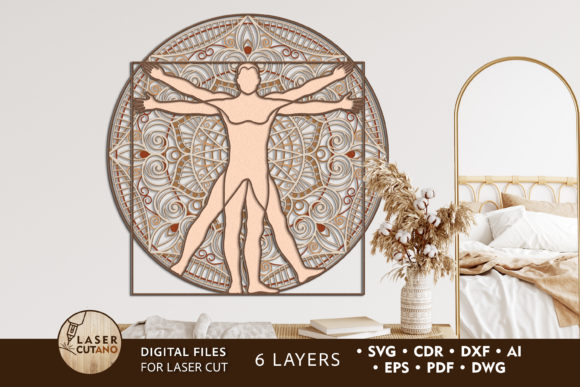
Reviewing the Multilayer Vitruvian Man Design
As a designer who has spent years navigating the intersection of digital files and physical textiles, I approach every new asset with a critical eye. When I first opened the file for the Multilayer Vitruvian Man, my initial reaction was one of cautious optimism. The description highlights it as a creative design prepared specifically for laser cutting and SVG use, which immediately signals that this is a structural layout rather than a traditional stitch-ready embroidery file. For those of us in the craft business, understanding this distinction is vital before we commit to a project.
The visual personality of the Multilayer Vitruvian Man is bold and geometric. It relies on the classic proportions of Da Vinci's drawing but breaks them down into distinct layers. This layered approach is fantastic for creating depth, but it requires a specific mindset when translating it from a flat digital file into a tactile finished product. If you are an Etsy seller or running a small shop looking for unique Wall Decor, this design offers a modern twist on a timeless icon. However, its application depends entirely on how you interpret the "multilayer" aspect within your specific medium.
Translating Layers into Textile Depth
Let's talk about a real-life scenario. Imagine you are preparing a custom embroidered tote bag for a boutique client who wants something intellectual yet artistic. You might be tempted to treat the Multilayer Vitruvian Man as a standard machine embroidery design where layers are simply different colors of thread stacked on top of each other. In reality, because this file is optimized for Laser Cutting, the layers are meant to be physically separated or stacked in 3D space.
If you decide to adapt this for embroidery, you cannot simply import it as a single unit. You would need to deconstruct the layout. Perhaps the outer circle becomes a dense fill stitch in a neutral tone, while the inner figure is rendered in a contrasting satin stitch. Or, you could create an applique design where the layers are cut from felt or leather and stitched onto a canvas background. This approach mimics the intended laser-cut aesthetic, giving the custom apparel a premium, architectural feel that customers love.
I recently considered using a similar layered concept for a sweatshirt embroidery project. The challenge was ensuring the visual weight didn't overwhelm the fabric. With the Multilayer Vitruvian Man, the density of the lines means that if you try to stitch everything at once without strategic layering, you risk puckering the fabric. The key is to treat each layer of the design as a separate element, building up the image slowly. This technique not only preserves the integrity of the stitch density but also enhances the perceived value of the handmade product.
Practical Considerations for Small Business Owners
For creative entrepreneurs selling digital product assets or finished goods, the versatility of this design is a double-edged sword. On one hand, it fits perfectly into categories like holiday gifts or personalized decor for home offices. A framed piece featuring the Multilayer Vitruvian Man made from wood via laser cutting is stunning, but an embroidered version on a pillow cover or tea towel tells a different story.
When adapting this for textile use, you must consider the hoop size. The intricate details of the Vitruvian figure require enough space to render clearly. Attempting to shrink this design for a small cap or a baby onesie will likely result in lost detail and muddy stitching. Instead, reserve this design for larger surfaces where the geometry can breathe. Think large tote bag design layouts, wall hangings, or even embroidered patch collections where the scale allows for precision.
Fabric texture plays a massive role here. If you are working with stretchy fabric like jersey knit, the complex lines of the Multilayer Vitruvian Man might distort during the washing process. I always recommend testing the design on scrap fabric first. Use a heavy-duty stabilizer to ensure the stitches lay flat and the shape remains true. For dark fabric backgrounds, the contrast between layers becomes even more critical; you may need to adjust your thread colors to ensure the inner details don't get swallowed by the background.
Maximizing Visual Appeal and Brand Consistency
The ultimate goal of any commercial embroidery project is to build customer trust through quality. A well-executed Multilayer Vitruvian Man project signals attention to detail. When a buyer sees the clear separation of layers and the crisp definition of the figure, they perceive the item as high-end. This is crucial for small shop merchandise trying to stand out in a crowded market.
However, do not rush the process. Review the stitch density carefully. Areas where the arms and legs intersect in the original design can become dense knots if not managed properly. In a laser-cut context, these intersections are clean cuts; in embroidery, they are potential weak points. You might need to simplify certain junctions or use a running stitch outline to define edges without adding bulk.
Before listing your items, create printable mockups to visualize how the design looks on different products. Test it in black and white to check the contrast, then compare light and dark fabric backgrounds. Does the Multilayer Vitruvian Man maintain its iconic status on a navy blue apron? Does it pop on a cream-colored nursery blanket? These decisions affect buyer engagement and ultimately, sales.
Final Thoughts on Licensing and Usage
As with any design assets you bring into your workflow, always confirm licensing before selling finished items. The description notes that these are Digital multilayer layout files specially prepared for your ideas, but terms can vary. Ensure you have the right to use this embroidery file adaptation for commercial purposes, whether you are making a single personalized gift or mass-producing craft business inventory.
In conclusion, the Multilayer Vitruvian Man is a powerful tool for designers willing to put in the extra effort to translate its layered logic into thread. It is not a plug-and-play solution, but for those who understand the nuances of embroidery project planning, it offers a unique opportunity to create standout pieces. Whether you are aiming for a sophisticated Wall Decor piece or a statement custom apparel item, this design rewards patience and technical skill with a result that feels both historic and refreshingly modern.